- Published on
Supermicro's $2.5 Billion Alleged Betrayal
- Authors

- Name
- Mike Rotchberns
- @MRotchberns
Hair Dryers, Dummy Servers, and a Co-Founder in Handcuffs
Silicon Valley loves a good origin story. Garage startups, visionary founders, world-changing technology. What it doesn't love — or at least pretends not to — is when one of those founders allegedly spends two years running a $2.5 billion smuggling operation out of the company he helped build. And yet, here we are.
On March 19, 2026, federal prosecutors unsealed an indictment charging Yih-Shyan "Wally" Liaw — co-founder, board member, and Senior Vice President of Business Development at Super Micro Computer — along with two associates, with conspiracy to violate U.S. export control laws. The charges, filed in Manhattan federal court (Southern District of New York), include conspiracy to violate the Export Controls Reform Act (carrying a maximum of 20 years), conspiracy to smuggle goods from the United States (maximum 5 years), and conspiracy to defraud the U.S. government (maximum 5 years). If convicted on all counts, Liaw faces a combined statutory maximum of 30 years — though it bears emphasizing that statutory maximums rarely reflect actual sentences handed down under federal sentencing guidelines, which weigh criminal history, role in the offense, and other factors. All charges are allegations; Liaw has not been convicted of anything. 1
The other two defendants are Ruei-Tsang "Steven" Chang, Supermicro's Taiwan general manager, who remains a fugitive, and Ting-Wei "Willy" Sun, a third-party contractor described by the DOJ as a "fixer." Liaw was arrested in California and released on unsecured bond, with a bond hearing scheduled for Wednesday. Sun was taken into custody and awaits a detention hearing scheduled for Monday afternoon. Co-founder of tech company charged with diverting $2.5 billion in Nvidia AI chips to China

The Alleged Scheme: A Masterclass in Audacity
What the DOJ alleges here isn't some sloppy back-channel deal. This was, according to the indictment, an elaborate, multi-year operation that would be almost impressive if it weren't so spectacularly illegal.
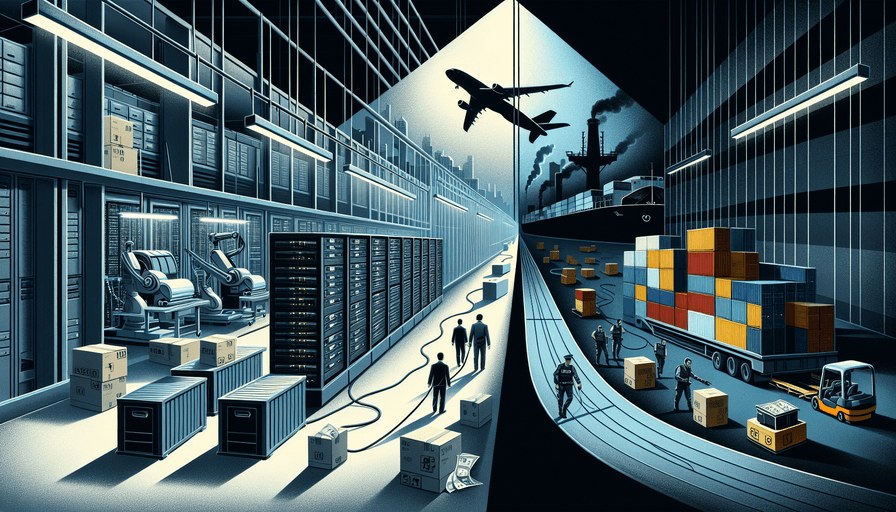
The mechanics were straightforward enough in concept: use a Southeast Asian shell company — referred to in the indictment as "Company-1" — to place purchase orders with Supermicro for high-performance servers packed with Nvidia GPUs. Those servers would be assembled in the U.S., shipped to Supermicro's Taiwan facilities, then handed off to Company-1, which would repackage them in unmarked boxes and forward them to their true destination: China. All of it allegedly in direct violation of U.S. Department of Commerce export license requirements under the Export Controls Reform Act — the same regulatory framework governing the transfer of advanced AI accelerator hardware deemed strategically significant to national security. 1
A brief note on why these chips matter so much to regulators: under the Export Controls Reform Act, enforced by the Department of Commerce's Bureau of Industry and Security, advanced AI accelerator chips and servers incorporating them require an export license before they can be transferred to China or Hong Kong. The restrictions were substantially tightened between 2022 and 2024. The indictment itself states that those regulations reflect a formal determination that "the computing capabilities in advanced artificial intelligence accelerator hardware are of sufficient strategic significance that their transfer to China poses an unacceptable risk to national security." While the indictment does not publicly identify the specific GPU models by name, reporting from Digitimes suggests that Nvidia's Blackwell B200 chips were among the hardware Chinese buyers were seeking. Supermicro co-founder charged in US$2.5 billion AI chip smuggling scheme to China
Between 2024 and 2025, Company-1 allegedly purchased approximately $2.5 billion worth of Supermicro servers under this arrangement. The alleged operation grew so bold that in a single three-week window between late April and mid-May 2025, roughly $510 million in U.S.-assembled servers were allegedly diverted to China. 1
But the truly jaw-dropping part? The alleged cover-up.
According to the DOJ indictment, to fool Supermicro's own compliance team, the defendants allegedly staged thousands of "dummy" servers — non-working physical replicas — at Company-1's warehouses. The real servers, of course, were already in China. During one audit, a compliance auditor was allegedly kept "off-site enjoying entertainment paid for by Company-1" while Sun photographed the fake servers and sent the images over as proof of inventory. 1
And then there's the detail that will live rent-free in my head: surveillance footage, according to the DOJ, allegedly captured individuals — specifically Sun and an unnamed co-conspirator — using hair dryers to remove and reapply serial number stickers onto the dummy server boxes. Hair dryers. For a $2.5 billion alleged conspiracy. 1
Encrypted messaging apps were allegedly used throughout to coordinate quantities, delivery locations in China, and strategies for evading detection. The defendants also allegedly pressured Supermicro's compliance team and, according to the indictment, corrupted at least one auditor in the process. 1
The Corporate Fallout
Supermicro has been quick to distance itself from the wreckage. The company stated it is not named as a defendant, placed Liaw and Chang on administrative leave, terminated Sun's contract, and pledged full cooperation with the investigation. In a statement issued Thursday, the company said: "The conduct by these individuals alleged in the indictment is a contravention of the Company's policies and compliance controls, including efforts to circumvent applicable export control laws and regulations." Super Micro co-founder indicted on Nvidia smuggling charges leaves board
By Friday, Liaw had resigned from the board entirely, reducing it to eight directors. The company also appointed DeAnna Luna — a former Intel executive who joined Supermicro in 2024 as vice president of global trade and sanctions compliance — as acting chief compliance officer. A new compliance chief. Right on cue.
The problem is that Supermicro's credibility on compliance matters has been circling the drain for years. In 2018, the company was suspended from Nasdaq trading over accounting issues. In 2020, it paid a $17.5 million SEC penalty. In October 2024, auditor Ernst & Young abruptly resigned mid-audit, stating it could "no longer rely on management's and the Audit Committee's representations" — a line that should have been a five-alarm fire for anyone paying attention. A special committee investigation followed, concluded there was no fraud, and everyone declared victory. 2
Then a co-founder got indicted. So, the committee may want to revisit their findings.
No defense attorney for Liaw has been identified publicly at this time, and CNN reported it was unable to identify legal representation for Sun. Chang, still at large, has not issued any public statement. The absence of any defense voice here is notable — and the legal proceedings are only just beginning.
The Market's Verdict
Wall Street did not need a committee to figure out what was happening. According to CNBC, Supermicro's stock plummeted 33% in regular trading on Thursday following the indictment. By Friday premarket, shares were down an additional 27%, trading at approximately $22.40 as of Friday morning — figures reported by TipRanks as of premarket March 20, 2026. Super Micro down 27% in premarket following export violation
Competitors Dell and HP Enterprise saw premarket gains of 4.6% and 4.1% respectively — the market already redistributing Supermicro's customers in its head.
Wall Street analysts maintain a cautious "Hold" consensus with an average price target of $41.00 — which, given Friday's premarket trading price, suggests either extraordinary optimism or a failure of imagination. SMCI: A High-Octane Paradox of AI Growth and Governance Risk
The Register reported that Supermicro recently posted $12.7 billion in quarterly revenue in its most recent earnings — a figure that reflects its position as a dominant AI infrastructure provider — though the company has also issued $40 billion in annual revenue guidance and gross margins have compressed to historic lows. That guidance was issued before a co-founder was led away in handcuffs. 3
Nvidia, for its part, issued a statement reiterating that compliance is a "top priority" and that it does not provide service or support for products illegally diverted to China. Supermicro accounts for roughly 9% of Nvidia's total revenue, which means this is not a minor footnote for the $4 trillion chipmaker either. 2
The Bigger Picture Nobody Wants to Say Out Loud
Here is what this case actually is, stripped of the legalese and the corporate PR: it's a story about the AI arms race allegedly creating so much money, so fast, that the temptation to route around the rules became apparently irresistible — even for a 71-year-old co-founder who had already built a multi-billion-dollar company from scratch and had every reason to know better.
The defendants allegedly knew exactly what they were doing. They allegedly built a system of fake servers, corrupted auditors, encrypted chats, and unmarked boxes specifically because they understood the legal exposure. The brazenness of the alleged operation — $510 million in a single three-week stretch — suggests that at some point, the money simply outweighed the risk calculus. It's worth noting that these are allegations, and the defendants are entitled to their day in court.
Export-control experts have long warned that the combination of enormous demand, limited supply, and aggressive enforcement creates exactly this kind of pressure. "Diversion schemes like those disrupted today generate billions of dollars in ill-gotten gains and pose a direct threat to U.S. national security," said U.S. Attorney Jay Clayton in the DOJ's statement. "Crimes involving sensitive technology must be met with swift action — otherwise the law is meaningless." 1
It didn't work out — allegedly.
Supermicro's real competitive advantages — its deep engineering relationship with Nvidia and its leadership in direct liquid cooling technology — remain intact, for now. But the company faces an existential question about customer trust and regulatory standing that no compliance officer appointment can paper over overnight. The legal proceedings are just beginning, Chang is still a fugitive, and the DOJ, FBI Counterintelligence Division, and Bureau of Industry and Security have all made clear they intend to pursue these cases aggressively.
For Supermicro, the bill for years of alleged governance failures has finally arrived. It came with federal agents attached — and if the indictment is any guide, it may have been paid for with a hair dryer. 1